
“Commuters thought I was drunk – but the truth was much more sinister”
A Kent man who appeared drunk but was actually suffering from a brain tumour is beginning for a month-long challenge to raise awareness of the disease.
John Starns, 63, from Sutton Valence was on his way to work in central London when he suddenly felt unwell and got off the train at Sevenoaks. It was February 2022 and he spent the next two hours slumped and sweating on a bench, as commuters walked by unaware, he was showing symptoms of a vestibular schwannoma brain tumour.
“It felt as though I was having a panic attack. I was disorientated and it became difficult to walk. I found a bench and sat there for two hours, alone. No-one approached me, I suspect because they thought I was drunk,” said John.
John was initially told he had vertigo but when there was no improvement with medication, an MRI scan three months later, revealed a brain tumour.
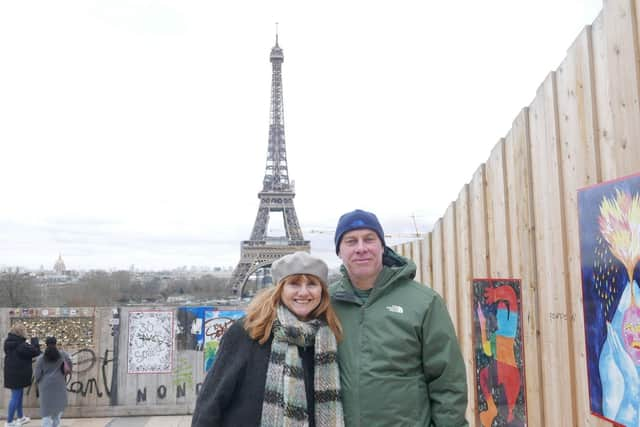

He is working with Brain Tumour Research, a charity campaigning to increase the national investment in research into brain tumours to £35 million per year.
The freelance photographer added: “It was a scary process, the MRI and hearing the words brain tumour, but I will never forget the emotional release when the nurse told me my tumour was benign.”
More than three years on, John, a keen cyclist, is monitored with a scan every two years. Now he's gearing up for Cycle 274 Miles in August, a month-long fundraiser to help shine a light on the disease and support the charity.
“So far, scans have showed my tumour as stable, and I barely suffer with any side effects. I am one of the lucky ones, but this isn’t about me. I’m committing to this cycle challenge to raise awareness of the disease and the desperate inadequacies that currently exist in the historic underfunding of brain tumours compared to other cancers.”
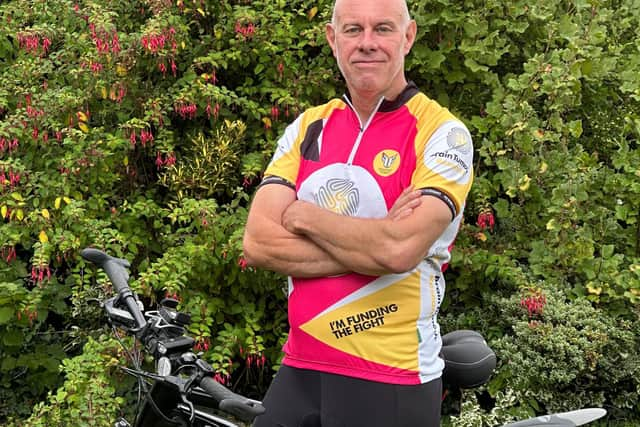
John who has been cycling since he was five years old, added: “I cycle up to 20 miles a day, so I’ll have no problems reaching the 274-mile target. My story could have ended differently. That’s the reality for others. My hope is that by supporting Brain Tumour Research, more people will benefit from the advances in research.”
Brain tumours kill more men under 70 than prostate cancer, yet just 1% of the national spend on cancer research has been allocated to brain tumours since records began in 2002.
Charlie Allsebrook, community development manager at Brain Tumour Research, said: “John’s story is not uncommon, brain tumours are indiscriminate and can affect anyone at any age. One in three people in the UK knows someone affected by a brain tumour but Brain Tumour Research is working to change this. It’s with the support of people like John who will help us drive investment towards research into brain tumours. Good luck John!”
To donate to Brain Tumour Research via John’s Cycle 274 Challenge visit: www.justgiving.com/fundraising/john1752689276933
Brain Tumour Research funds sustainable research at dedicated centres in the UK. It also campaigns for the Government and larger cancer charities to invest more in research into brain tumours in order to speed up new treatments for patients and, ultimately, to find a cure. The charity is the driving force behind the call for a national annual spend of £35 million in order to improve survival rates and patient outcomes in line with other cancers such as breast cancer and leukaemia.