
Moon Hall responds to High Court ruling on VAT for SEN children
Following the High Court’s ruling on Friday regarding the imposition of VAT on independent school fees, a move that includes schools supporting children with Special Educational Needs (SEN), Moon Hall School responds with deep concern and disappointment.
While the court did not rule the policy illegal, it did acknowledge what many feared: the VAT policy does discriminate against children with SEN.
The judgment effectively admits that these children are disadvantaged but allows it to stand because the state sector is already so overstretched and under-resourced. In other words, the only reason this decision wasn't deemed unlawful is because the alternative is worse.
The legal challenge, brought by families of children with special educational needs, was led by Paul Conrathe of Sinclairslaw and heard over three days in the High Court, with an additional hearing prompted by parliamentary concerns over the admissibility of evidence.
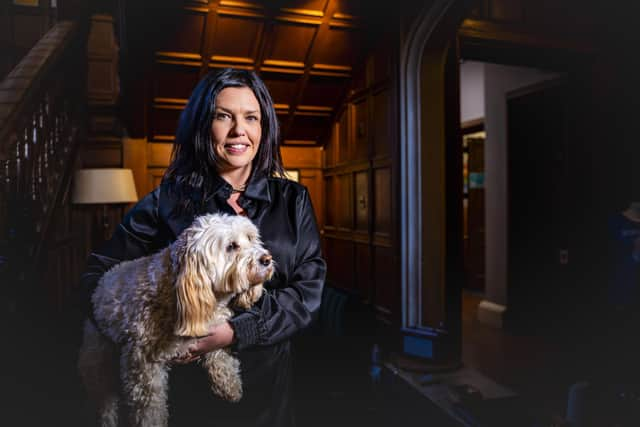

While the Court ultimately upheld the legality of the VAT policy, it did recognise that children with SEND - particularly those without an Education, Health and Care Plan (EHCP) - are being discriminated against by its imposition.
Mr Conrathe described the judgment as “powerful,” highlighting its clear exposure of the deep crisis in the state provision for SEND children. He warned that many of the most vulnerable are being pushed into a system already struggling to cope, which could ultimately harm both those new to it and those already within it.
While the Government had argued that the VAT would fund improvements in the state system, recent comments from the Prime Minister suggest the revenue may instead be redirected elsewhere, such as housing, prompting renewed concern about the policy’s true priorities.
As Moon Hall School’s Executive Head, Mrs Michelle Catterson, stated: “This isn’t levelling up - this is levelling down. The government has created a policy that punishes families seeking vital support for their children’s needs. It’s deeply disheartening that our most vulnerable children are being used to balance the books, rather than being supported to thrive.”

Schools like Moon Hall, which specialise in supporting children with Dyslexia, play a crucial role in complementing the state system, particularly where capacity or specialist provision may fall short. Many families who turn to independent SEN schools do so not out of choice, but out of necessity. They are often making significant personal sacrifices to access the support their children urgently need.
Mrs Catterson continues: “As Mahatma Gandhi once said, “The true measure of any society can be found in how it treats its most vulnerable members.” By that measure, this policy - and the system that defends it – is failing. We call on policymakers to act with compassion and urgency. SEN children deserve better than this.
"The so-called "enviable manifesto pledge" now rings hollow, revealing itself as the politics of envy. It threatens to dismantle a support network that thousands of SEN children rely on, all while generating revenue that won’t be reinvested in the education system at all."