
Gatwick campaign calls for house builders to warn potential buyers about how airspace changes how ‘significantly impact future property values and quality of life’

A Gatwick campaign group says house builders and estate agents in the South East should be required to warn prospective buyers that planned airspace changes linked to Gatwick Airport could ‘significantly impact future property values and quality of life’.
The National Planning Policy Framework (NPPF) new methodology proposes the construction of tens of thousands of new homes across the South East. However, CAGNE (Communities Against Gatwick Noise Emissions) says concerns are growing that much of the land identified for development could be affected by airspace changes, potentially exposing new and existing homes to increased aircraft noise.
British Standard 8233, sets out guidance on acceptable noise levels within residential properties. There was a recent consultation on an updated version with a focus on new build homes in relation to aviation noise impacts and covers insulation and ventilation.
Sally Pavey, chair of CAGNE, the independent umbrella aviation community and environmental group representing Sussex, Surrey and Kent, said: “At present, there is little that house builders or homebuyers can do to protect themselves. Without clear planning safeguards, mandatory disclosure, or noise mitigation requirements, buyers are left hoping their homes won’t be affected. Hope is not a housing policy.
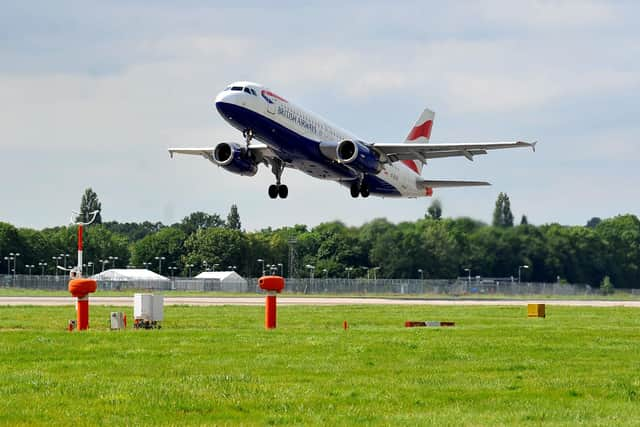

“With the housing market already volatile due to rising living costs and proposed property taxes, buyers could unknowingly invest in homes that later fall under new or intensified flight paths. Should homebuyers really be left in the dark about airspace decisions that could result in negative equity and long-term noise impacts?
“Airspace change is not expected to be finalised until the 2030s, yet house building is happening now.”
CAGNE said Gatwick Airport and the Aviation Community and Organisation Group (ACOG) have already identified areas south of Gatwick for growth in flight paths and aircraft movements. Responsibility for delivering airspace change has now been passed to the UK Airspace Design Service (UKADS).
Like all major airports, London Gatwick is taking part in the UK-wide government-led programme to modernise the country’s airspace. This work will enable aircraft to climb more quickly and take more direct routes, leading to an overall reduction in noise, carbon emissions and delays. This is a public process and the project’s progress is openly documented on the CAA’s website.
Aircraft today mostly follow outdated routes that were put in place in the 1950s. With modern navigation technology and updated airspace designs, these aircraft could climb more quickly and take more direct routes.
CAGNE say there is currently no policy requirement for developers to install noise mitigation measures—such as enhanced insulation, triple glazing, or mechanical ventilation—in homes that may be affected by aircraft noise. Existing aviation policy only requires airports to offer insulation when a new runway is built. The Government has also stated that airspace change alone will not trigger compensation for homeowners impacted by altered flight paths.
Pavey added: “Whether Gatwick operates with one runway or three, the airport has already identified the volume of airspace it requires,” Pavey added. “It has pushed ahead through the Civil Aviation Authority’s CAP1616 consultation process, only for a deeply flawed system to be handed to a purely aviation-led body, UKADS. This is totally disgraceful with the CAA judging their own work as there is no independent body to hold them accountable.”
Paul Steedman, Director of Sussex Campaign to Protect Rural England said: "Aviation expansion will be disastrous for homeowners, local communities and the countryside alike. The additional noise will further erode the peace and tranquillity that makes the Sussex countryside special - on top of additional congestion and climate pollution. The government must make clear how it intends to safeguard our rural communities."
CAGNE and branches of CPRE are calling on Government, planning authorities, and the property industry to urgently address the disconnect between housing growth and aviation policy, and to ensure that buyers are fully informed of potential future impacts before making the biggest purchase of their lives.