
Flight punctuality significantly improves at London Gatwick in 2025, finds Civil Aviation Authority data
New analysis of Civil Aviation Authority (CAA) data covering the first six months of 2025 has revealed that delays to flights at London Gatwick decreased in the first half of 2025, compared to the same period in 2024.
Between January and June 2025, 75.5 per cent of flights were on-time according to the CAA, up from 69 per cent across the first half of 2024.
The analysis, conducted by air passenger rights experts, AirAdvisor, found that across the same time period an average of 77 per cent of flights from all UK airports were on-time, meaning punctuality at Gatwick Airport is still slightly worse than the national average.
Between January and June of this year, 71.5 per cent of flights at Manchester Airport were on-time. At Birmingham, this figure stood at 72.5 per cent, also below the national average.
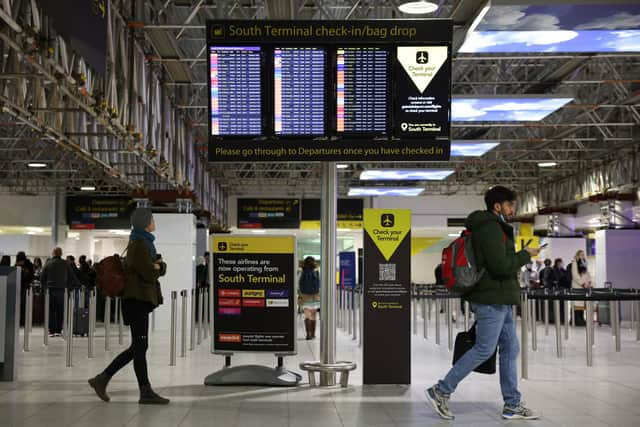

The major UK airport with the best flight punctuality rate according to the CAA’s data was Aberdeen where 83 per cent of flights were on-time in the first six months of this year.
Eighty-two per cent of flights at Liverpool were on-time, while both Belfast City (82.5 per cent) and Belfast International (81.5 per cent) fared well in the findings.
The CAA’s data assesses the percentage of flights from each airport that are on time. The CAA considers a flight as ‘on-time’ if it arrives or departs from the airport gate within 15 minutes of its scheduled time. The CAA collects punctuality information from 25 UK airports - these are typically the largest airports in terms of passengers.
Anton Radchenko, CEO of AirAdvisor, said: “Delays decreased at Gatwick Airport in the first half of 2025 compared to the previous year, however the airport is still performing below the national average in terms of punctuality.
“The picture in terms of flight delays is definitely improving across the UK. According to the CAA, only 72.5 per cent of UK flights in the first six months of 2024 were on-time, so the leap to 77 per cent in the same time period this year, is a marked improvement.
“In the years that followed the pandemic, flight delays rocketed to record highs due to airlines and airports struggling with staff shortages and supply chain issues that combined with a surge in demand for air travel. In 2022, for instance, the amount of flights on-time plummeted to
“Airlines, in particular, were caught between a rock and a hard place, because UK government legislation means that passengers can claim compensation if their flight is delayed due to a situation that an airline could have avoided.
“So, in recent years especially, it’s been in airlines’ interest to do what they can to reduce flight delays - and rightly so, especially when you consider how much more expensive most flights are now, compared to say, ten years ago.
“Likewise, airport managers want their hubs to be destinations where passengers begin unforgettable journeys in a comfortable and stress-free manner. Because of this, they also work to keep delays as low as possible.”