
Surrey and Sussex Healthcare NHS Trust staff highlight ‘widespread burnout’ and ‘feeling undervalued’ in new report
Staff at Surrey and Sussex Healthcare NHS Trust have highlighted ‘widespread burnout’ and ‘feeling undervalued’, according to a Care Quality Commission (CQC) report.
The CQC has taken action to protect people while downgrading leadership at Surrey and Sussex Healthcare NHS Trust from outstanding to requires improvement following an inspection in November last year.
Surrey and Sussex Healthcare NHS Trust provides healthcare services for around 744,000 people across East Surrey, West Sussex, and South Croydon.
CQC carried out this inspection as part of its ongoing monitoring of services.
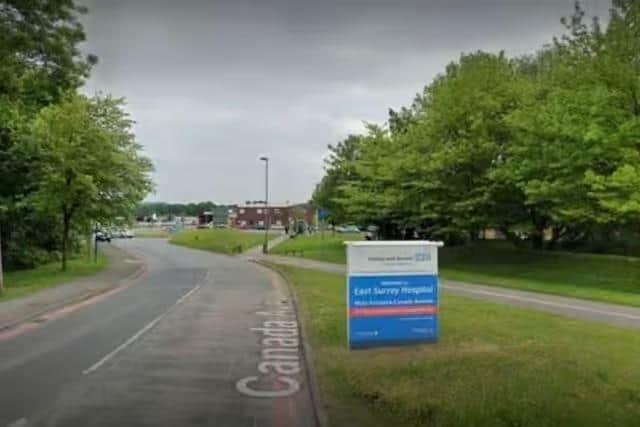

CQC found a breach of the regulations relating to how the trust is managed. Due to the level of the concerns, the trust was issued with a warning notice to focus its attention on making immediate improvements for people using services.
CQC last rated how well-led the trust is as outstanding in an inspection using its previous methodology for trust ratings. CQC now gives NHS trusts a single trust-level rating focusing on leadership and culture that replaces all other ratings at that level.
Amanda Williams, CQC deputy director of hospitals, secondary and specialist care for Surrey and Sussex, said: “When our inspectors visited Surrey and Sussex Healthcare NHS Trust, we found hard working staff, but a significant gap between the stated ambitions of leaders and the daily reality experienced by its staff and the people who rely on its services.
“What concerned us most was how many staff told us they didn’t feel safe to speak up. Our inspectors heard that raising concerns through formal channels was difficult, that people feared reprisal, and that concerns weren’t always resolved when they were raised. If staff don’t feel they can speak up, risks go unaddressed and that can have real consequences for the people in their care.
“We also found that staff from ethnic minority groups, who make up nearly half the workforce, and those with disabilities were having markedly worse experiences than their colleagues, facing higher rates of bullying and harassment, and significantly fewer opportunities to progress. That kind of disparity can’t be ignored.
“Staff described widespread burnout, feeling undervalued, and a disconnect between frontline teams and leadership. There’d been a significant drop in staff believing care of people was the organisation’s top priority.
“However, our inspectors did see genuine commitment to improvement. The trust had a programme empowering staff to drive real changes including practical improvements that meant people weren’t waiting as long for basic care needs to be met.
“We have shared our findings with the trust’s management, who are aware of the improvements needed, including addressing the organisation’s culture. We will continue to monitor the trust, including through future inspections, to ensure people remain safe while improvements are made.”
Inspectors found:
- The trust did not address inequalities affecting people living in more deprived areas, who experienced longer waits and lower appointment attendance than average.
- Leaders didn’t ensure effective systems were in place to prevent longer surgical waits for autistic people and people with a learning disability or to consistently identify and support people with additional communication needs.
- The trust handled around 650 complaints a year but had no dedicated team to manage them. Responses were often late and of variable quality, and the changes made so far hadn’t yet made a difference to people or given them a stronger voice.
Inspectors also found:
- Leaders worked with other local health organisations to help older and more frail people stay out of hospital and get care closer to home, including embedding specialist doctors directly into community teams.
- The trust expanded access to diagnostic tests such as scans and blood tests, by opening new local facilities. This meant people could get tested closer to where they live.
- Staff drove practical improvements that made a real difference to people day to day. On one ward, a simple change to how equipment was stored meant people got help with personal care more quickly.
The report will be published on CQC’s website in the coming days.