
Nearly 75 per cent of London Gatwick workers have received abuse at least once a month, survey finds
A landmark survey by Unite, the leading union in civil air transport, has laid bare the scale of abuse suffered by workers at London Gatwick.
Unite has launched its Abuse Doesn’t Fly Campaign which is calling for new laws to be introduced to ensure that violent and abusive passengers are banned from airports. Crucially such bans should be co-ordinated to ensure passengers can’t simply transfer to different airlines and airports.
The landmark poll found 74 per cent of workers at the UK’s second biggest airport – including ground staff and cabin crew who work for third service providers – have received abuse at least once a month.
Meanwhile almost half (42 per cent) had been physically assaulted and 87 per cent have witnessed a colleague being abused.
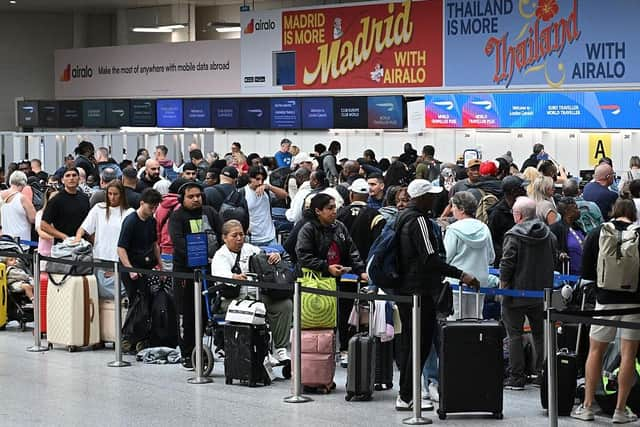

Alcohol was found to be the biggest trigger for abuse from passengers, followed by flight delays or cancellations and baggage issues.
A London Gatwick spokesperson said: “The safety and security of London Gatwick staff and passengers is always our top priority. No staff member should face verbal or physical abuse.
“Our support includes dedicated phone lines and app channels for staff to report incidents and get emergency assistance, alongside proactive support of the cross-industry 'One Too Many' campaign, and we work closely with partners including airlines, third-party service providers and the police to ensure everyone's protection."
Unite general secretary Sharon Graham said: “Abuse towards airport and aviation workers is not 'part of the job', it is a workplace safety issue that affects workers on the ground and in the air and can ultimately put other passengers at risk. All too often these workers are being left in harmful positions while doing very difficult jobs.
“Airports and airlines now need to up their game on this. They must make the safety of workers their top priority and work with Unite to stamp out workplace abuse once and for all. No worker should ever be put in dangerous situations for simply doing their job.”
On Friday, October 30, changes to the law around third-party harassment came into force as part of the Employment Rights Act 2025. These changes will mean employers such as airlines and airports must take all reasonable steps to prevent harassment of workers by third parties, such as customers or passengers, otherwise they will be liable.
Meanwhile, the Aviation Bill is currently going through parliament. This includes measures about disruptive passengers, but Unite does not believe that the Bill currently goes far enough to protect workers.
Urgent change is needed. Unite has now launched its Abuse Doesn't Fly campaign, which is calling for:
- A clear, national, worker-led approach to abusive and disruptive passenger behaviour in the form of a Worker Safety Charter. Out of those surveyed by Unite, 98 per cent of workers – including ground staff and cabin crew – supported this plan.
- Giving airports and airlines the power to ban disruptive and abusive passengers, as well as the power to coordinate between airports to make this effective.
- Minimum standards to be introduced across the industry, ensuring workers are adequately protected from abuse and are properly supported when incidents occur.
Too often, the focus is only on incidents on board the aircraft itself. Unite believes if abuse is not challenged properly at the airport, the risk is simply moved further down the passenger journey, which is why it is crucial that a ban can be triggered by aggressive behaviour in the terminal itself.
The Aviation Bill will give the Civil Aviation Authority the power to ban disruptive passengers across multiple airlines – yet this only applies to abuse that happens on the plane itself. However, Unite’s campaign is looking to have this extended so airports can intervene early and stop abuse before travellers board.
Unite sent the survey to all its UK members in the civil air transport sector, which includes ground staff, such as workers on check-in desks, in security screening and baggage handling as well as cabin crew and received around 1,800 responses. It included workers at Gatwick Airport.
The survey also found that 87 per cent of ground staff and 89 per cent of cabin crew had witnessed a colleague being abused.
When questioned on the adequacy of the support available after experiencing abuse, 71 per cent of ground staff and 60 per cent of cabin crew reported that management support was not adequate, with reporting procedures also judged to be inadequate by 74 per cent of ground staff and 62 per cent of cabin crew.
A previous survey by Unite from 2025 found 34 per cent of women working in civil air transport had been sexually harassed at work.
Unite national officer Oliver Richardson said: “Every aviation worker has the right to work free from abuse, threats, intimidation and violence.”
“We need coordinated action against serious or repeat offenders. If both airports and airlines have the legal right to ban disruptive passengers from flying, it would go a long way to ensuring workers are kept safe.”