
From the ballot to the press box: living my Wimbledon dream

There are few sporting events that capture the imagination quite like Wimbledon.
I'd been fortunate enough to experience The Championships twice before after being successful in the public ballot, soaking up the atmosphere as a fan among thousands of tennis lovers.
But every time I walked through those famous gates, another dream lingered in the back of my mind: one day, I wanted to come back as a journalist.
This summer, that dream became a reality.
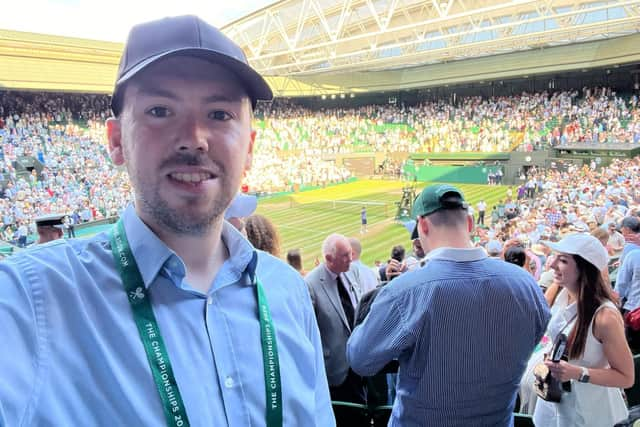

Walking into the All England Club with media accreditation around my neck instead of a spectator's ticket felt surreal. Suddenly, I wasn't just watching history unfold – I was there to report it. My brief was to focus on Sussex and Surrey players while also following competitors with links to recent editions of the Eastbourne tournament, a task that made the fortnight even more rewarding.
Not everything went to plan.
Before the tournament had really begun, there was disappointment for British tennis fans as Surrey's Jack Draper withdrew through injury despite arriving in excellent form after a strong week in Eastbourne. This came soon after Emma Raducanu's withdrawal, making it a frustrating start for home supporters.
The local spotlight, on day one, fell on Sussex's Alicia Dudeney, who received a wildcard into the women's draw. The 23-year-old was flying the flag for Brighton, with Sonay Kartal sidelined through injury. Although Dudeney was unable to progress beyond the opening round in either singles or doubles, simply competing on one of the sport's biggest stages represented an unforgettable achievement. Surrey wildcard Jack Pinnington Jones also exited in the first round, but, like Dudeney, gained invaluable experience.
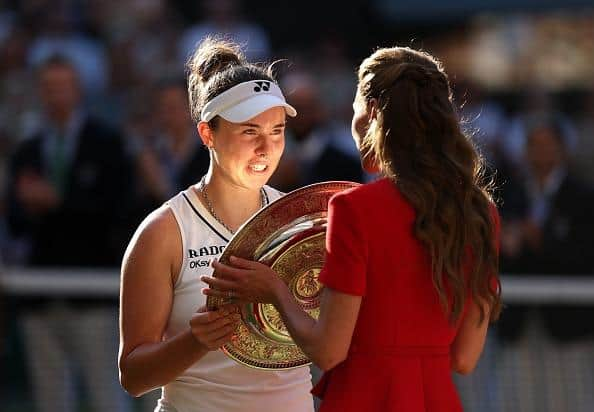
One of the stories I most enjoyed following was the doubles campaign of Burgess Hill-born / Brighton resident Julian Cash and his partner Lloyd Glasspool. The defending champions produced another impressive run before eventually bowing out in the quarter-finals. While they were unable to defend their historic 2025 title, their tournament was still a success, and interviewing them along the way proved fascinating. Their concerns over controversial ATP proposals and what they could mean for the future of doubles tennis added another dimension to the story beyond what happened on court.
Arthur Fery emerged as Britain's standout singles performer. Watching the Wimbledon-born player defy expectations and reach the semi-finals was one of the highlights of the fortnight. Every victory seemed to generate even more belief among the home crowd.
But perhaps the moment I'll remember most came when Serena Williams returned to Centre Court for the first time in four years.
The seven-time Wimbledon champion faced last year's Eastbourne winner Maya Joint, conveniently providing a local angle for our coverage. Yet, once Serena walked onto Centre Court, the story almost wrote itself. Goosebumps is an overused word in sport, but it genuinely applied. The atmosphere crackled with excitement as one of the greatest players the game has ever seen stepped back onto the most famous tennis court in the world.
Joint came through victorious before later losing to Alexandra Eala in a repeat of the 2025 Eastbourne final. It felt like a measure of revenge for Eala after her heartbreaking defeat at Devonshire Park a year earlier.
The beauty of covering Wimbledon is that every stroll around the grounds offers another match featuring world class talent. Across the fortnight, I was fortunate enough to watch Novak Djokovic, Jannik Sinner, Amanda Anisimova, Coco Gauff and Grigor Dimitrov to name just a handful.
Stan Wawrinka’s Wimbledon farewell match against Matteo Berrettini will live in my memory for years to come. The atmosphere on court one was electric.
For someone who has followed tennis for years, it often felt like I had to pinch myself.
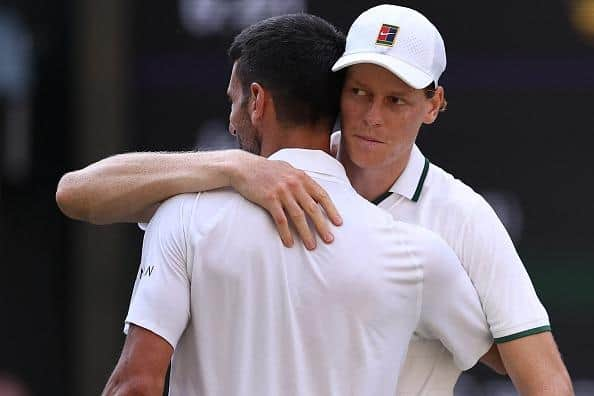
Watching Sinner take on Djokovic from the press seats was one of those moments. The view was incredible, but what made the experience truly special was everything happening away from the television cameras. Sitting in press conferences with the world's best players, working alongside journalists I'd admired for years and seeing how one of the biggest sporting events on the planet operates behind the scenes was every bit as fascinating as the tennis itself.
One particular highlight was meeting The Tennis Podcast team. After listening to them for years and learning so much about the sport through their work, it was lovely to introduce myself and thank them in person. They couldn't have been more welcoming.
Of course, no Wimbledon fortnight would be complete without at least one mishap.
Mine came on day one thanks to what can only be described as a schoolboy error. Keen to look the part, I wore a brand-new pair of smart shoes, blissfully underestimating just how much walking a journalist does at Wimbledon. Nineteen thousand steps later, I found myself seeking medical assistance near Centre Court with two spectacular blisters on my heels. Needless to say, the smart shoes never returned, with comfortable trainers becoming my footwear of choice for the remainder of the tournament.
At least those fancy shoes weren't a complete waste. During a fun activity in Wimbledon Park, I somehow managed to return a professional serve – admittedly AI-generated rather than delivered by a real player – while wearing them. How many people can honestly say they've done that?
Looking back, Wimbledon exceeded every expectation I had. It wasn't just about watching world-class tennis. It was about telling stories, meeting inspiring people, asking questions in press conferences I had previously only watched on television, and experiencing one of sport's greatest events from an entirely different perspective.
As a fan, Wimbledon is magical.
As a journalist, it's unforgettable.